Strategies
Airdrop Farming Is a Game of Speed and Distribution — Swapcoin Blog
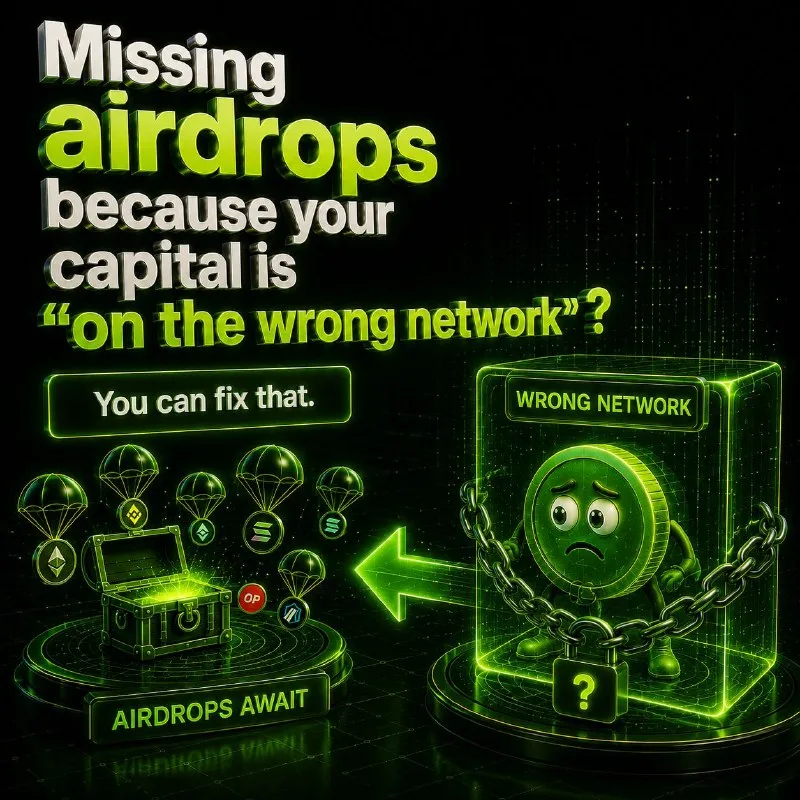
To qualify for an airdrop you need to be present on the target network. Swapcoin helps you spread capital across 60+ networks in minutes.
Airdrop Farming Is a Game of Speed and Distribution
Airdrops are how new protocols distribute tokens to the people who helped them get off the ground. The rules are published after the fact, the eligibility is judged at a snapshot, and the only question that matters is simple: where were you when the snapshot happened?
The game is speed and distribution. The people who qualify for an airdrop are rarely on a single network — they are present where the protocol lives, doing the activity it rewards. This article is about getting there fast, and getting there everywhere you need to be.
Airdrops Reward Presence at the Snapshot
When a protocol announces future token distribution, it almost always ties eligibility to on-chain activity: trading on its DEX, providing liquidity, using its bridge, holding its assets. The list is captured at a specific block — the snapshot — after which nothing you do changes the outcome.
So airdrop farming is a game with a deadline you don't know in advance. You cannot show up after the announcement and farm retroactively; you have to be ready before it. That is why “farm on every plausible network” beats “farm on one network really well.”
Be inside before the tweet
Don't be the one who finds out about an airdrop from someone else's news feed. Be the one who is already there.
Qualifying Activity Looks Different Everywhere
Each protocol values different behavior. Some count swap volume, some reward early liquidity, some distribute by the length of your interaction, and some simply pay the people who bridged onto the chain early. Because the criteria vary, distribution across networks is a hedge: being active on several plausible candidates covers you whichever rule wins.
The practical implication: your capital needs to be where the candidates are, not parked on the network you already know. And the fastest way to be wrong is to let your funds sit on Arbitrum while every promising protocol this quarter lives on Monad.
The Old Way to a New Network
Classically, getting ready for a season of farming meant a long checklist:
- Find a bridge that even supports the new network
- Check whether the bridge is reliable, audited, and not overloaded
- Transfer the assets, hoping the route works
- Swap into the tokens the network actually wants — another step, another fee
- Lose an hour and a meaningful slice of the amount to fees
Every extra step is a chance to arrive late, and late usually means “after the snapshot.”
The Fast Way: One Route, Ready Assets
Swapcoin compresses the checklist into a single flow. You choose the destination network, pick the token you want to arrive with, review the route and the flat 0.1% fee, and confirm. The bridging and the conversion happen as one route — and if the network needs gas to get started, the gas token can be included so you arrive ready to farm, not stuck figuring out how to pay for the first transaction.
That is the difference between watching an airdrop from the outside and being inside the snapshot. When a rumor hits that something big is coming to a new network, the farmers who can move in minutes are the ones who collect. New networks are added to Swapcoin routes as they emerge — see the latest in the networks overview.
Being inside the snapshot is also what makes the farm worth cost-counting in the first place — entries are small and repeated, and the turnaround is measured in hours, not weeks. The old manual chore of funding, bridging, and converting each network by hand is exactly where most would-be farmers stop: not for lack of capital, but for lack of a route that does it in one flow.
Where Farmers Are Flocking Right Now
New networks are where the density of upcoming distributions is highest, because they need liquidity and users from day one. Monad, Berachain, Plasma, and ADI have been the recent focus, each subsidizing early activity with incentives until the ecosystem stands on its own.
For the wider logic of entering young networks — why arrival order matters, and what early participants are actually being paid for — being first on a new network covers the economics in detail. And since conditions change week to week, seamless new-network integration explains how to enter before the crowd arrives.
A Word on Risks
Farming multiple networks is not free lunch. New chains carry tooling that changes, tokenomics that are still settling, and prices that move hard. Spread capital in amounts you can afford to leave, never move funds you cannot afford to lock up, and treat eligibility as a possibility — not a salary.
Speed is your edge, and workable capital is the tool. With your funds on the right networks before the snapshot, the outcome stops being lottery and starts being a repeatable process.