Yield
Become Part of the Liquidity — Earn From Aggregator Flow — Swapcoin Blog
Swapcoin routes transactions through connected DEX pools. Add liquidity and earn fees from a steady global flow of swaps. Here's how to start.
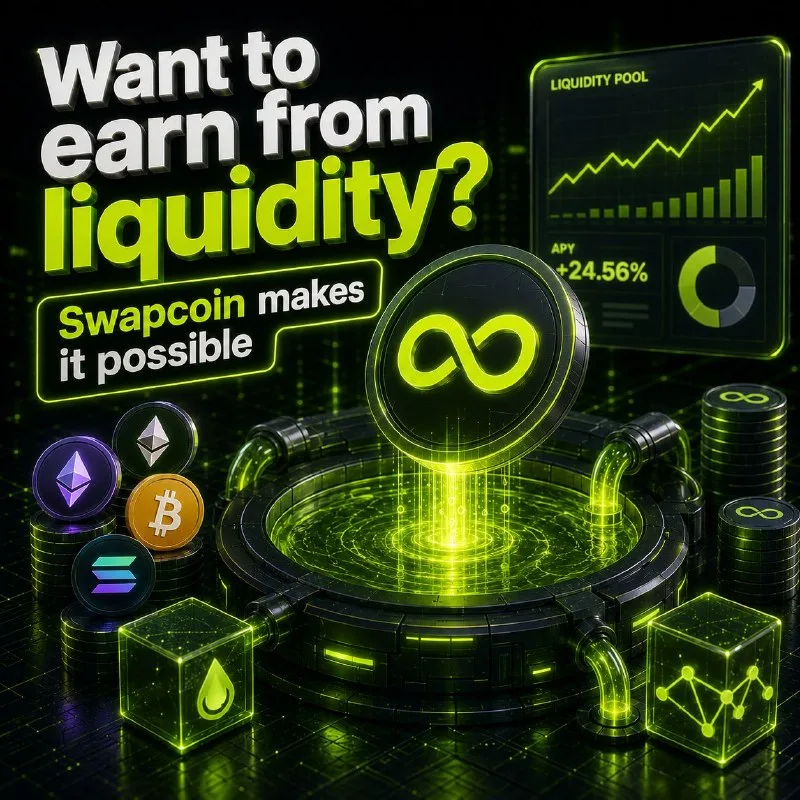
Become Part of the Liquidity — Earn From Aggregator Flow
Aggregators source their routes from existing liquidity pools. Every time a user swaps through Swapcoin, the transaction is routed through a DEX — Uniswap, Curve, Raydium, and others — where LPs have already supplied the tokens that make the trade possible. That flow is where aggregator power starts.
What if you want to be part of that infrastructure? Providing liquidity means you earn the fee from each transaction the aggregator routes through your pool. It is passive income, but not mysterious: you add the assets, the pool handles the trade, and the fee lands in your position.
Where Aggregator Flow Comes From
When a user transfers ETH into USDC via a route that crosses a Uniswap pool on Ethereum, part of the fee paid on that trade goes to the LPs who supplied the assets. The deeper and more consistent the pool, the more volume it attracts — and the more fee income it accumulates.
The aggregator effect is simple: instead of a pool only being used by people who happened to find its page, it is used by every route the aggregator considers. Becoming an LP is becoming part of that infrastructure — accessible, not exclusive.
Build the pipes, earn the traffic
Liquidity is what makes every swap possible. When you supply it, every transaction that passes through your pool pays you.
How You Earn as an LP
You deposit two assets into a DEX pool — for example ETH and USDC — and in return you receive a proportional share of the pool. Every trade that routes through it pays a small fee, and your share of the pool means a share of that fee.
The process is straightforward: pick the pool, supply the assets, and hold the position. The mechanics are not a secret — LPs are paid from trading activity. The money is boring by design.
Typical Returns: Realistic, Not Romantic
APRs vary across pools and networks, and they move with volume. As a rough guide, established pools on popular routes tend to offer less (because volume is split among more LPs), while newer networks with higher relative activity can pay substantially more.
- ETH/USDC on Uniswap (Ethereum): often 15–25% APR in high-volume periods
- USDC/USDT on Curve: lower but steadier, usually below 10%
- SOL pairs on Raydium: can spike much higher, but with more volatility in rewards
The point is not to chase the highest number — it is to choose the risk and exposure you want. A stablecoin-only pool behaves differently from a volatile pair, and both are legitimate income streams. Cross-chain arbitrage and other strategies rely on these same pools being deep and active.
Those figures only become meaningful once the pool sees steady volume — which is where route flow matters. A pool sitting on a busy aggregate route clears trades all day, so the fees it collects are many small amounts rather than a few rare ones. Small-but-regular is friendlier to an LP than occasional spikes, because income arrives predictably and does not depend on one lucky week.
The Honest Risks
The income comes with two kinds of risk. The first is smart-contract and bridge risk: any protocol you deposit into can have bugs. The second is impermanent loss: when one asset in the pair moves sharply against the other, your LP position can be worth less than simply holding the two assets apart.
LP income is therefore not interest on a risk-free account — it is yield earned for providing a service. Size your position with that in mind, prefer audited protocols, and start with amounts you are comfortable learning from. If you want to keep costs down while the position earns, the practical advice on why aggregation beats a single bridge applies to fees as much as routes.
How to Start
- Choose a pool whose assets you understand
- Add liquidity on the DEX of your choice — Uniswap, Curve, Raydium, and others are common starting points
- Observe how Swapcoin routes through your pool and how the fees appear
- Review periodically and rebalance when the pair's terms shift
The barrier is smaller than it seems: most pools accept small amounts, and the process is the same whether you supply $500 or $50,000. The time you spend is chosen, not demanded. And if any step still feels opaque, the fees are laid out fully in the transparent 0.1% fee breakdown.
Before you deposit, check the three numbers every good LP checks: the pair's trading volume, the fee tier, and the pool's depth. Volume decides whether fees flow at all, the fee tier decides how much of that volume you earn, and depth decides how much of your position is actually doing work. Ten minutes of reading usually separates a sensible entry from an impulse.
The clearest signal of a healthy LP position is boring: steady fee income, a pair you understand, and a pool with real activity. If those three hold, compounding quietly is usually the right move.