Network
Bridge NFTs Across Networks — Sell Where the Market Is — Swapcoin Blog
NFTs are stuck on the network they were created on. Swapcoin aggregates NFT bridges so you can trade wrapped NFTs on the most liquid marketplaces.
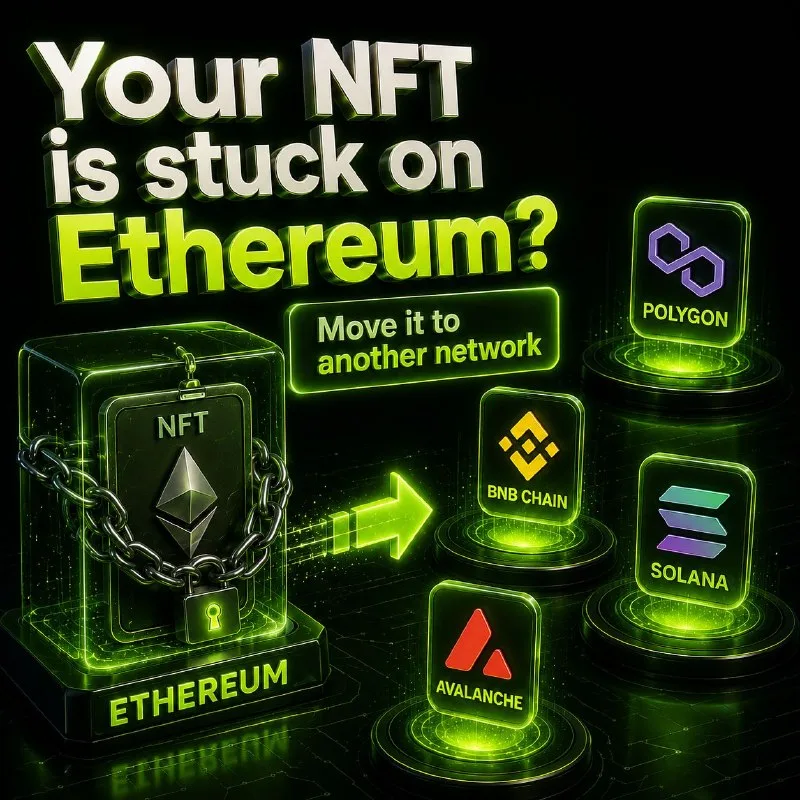
Bridge NFTs Across Networks — Sell Where the Market Is
NFT marketplaces have expanded well beyond Ethereum. Solana, Base, Polygon, Avalanche, and other networks each host their own collections, their own buyers, and their own liquidity. That is good news for sellers — until they realize the asset is on the wrong network.
Want to sell an NFT on Tensor in Solana, but it is sitting on Ethereum? Need to move a collection to Base where the fees are lower and the buyers are more active? The same basic challenge applies: you need a bridge, and you need a path that does not destroy value on the way. This article covers how NFT bridging works and why network choice is the real move.
Why NFTs Get Stuck
Every NFT lives on a specific ledger — usually Ethereum — and a marketplace can only trade what it can verify. A Solana marketplace cannot read Ethereum's contract state, and vice versa. The result is a wall of separation that freezes the asset where it was created, no matter how liquid the destination market is.
This is especially costly when a collection moves and the market follows. The most active buyers shift to another network, and anyone still holding on Ethereum is selling into thinner and thinner liquidity. Network choice is not just a technical decision; it determines who you sell to.
Move to the market, not the other way around
An NFT is only worth what someone will pay on the network where it is listed. Bridging is how you close the gap between the asset and the buyer.
Lock, Mint, Trade: How an NFT Bridge Works
An NFT bridge works in a lock-and-mint cycle: the original asset is locked on the source network, and a wrapped version — a reference representation — is created on the destination. The marketplace on the destination chain sees the wrapped copy and lists it as though it were native.
When the sale completes or the position ends, the wrapped asset is burned and the original unlocks. The mechanism is the same basic model that powers token bridges: lock-and-mint model explained covers the general concept in more detail.
Wrapped Doesn't Mean Copy
A wrapped NFT is not a duplicate — it is a token on another network whose existence is guaranteed by the locked original. That distinction matters: the original is the value; the wrapped form is the bridge version that allows market access.
The wrapped asset can be traded, used as collateral, or displayed on the new network, and when the user redeems, the bridge returns the original. The ecosystem works only because that guarantee is enforced by smart contracts, not by trust. For the broader mechanics behind bridging assets in general, how crypto bridges actually work lays out the architecture.
Sell Where the Market Is
The most common reason to bridge an NFT is straightforward: more liquid markets pay better. A collection with strong demand on Tensor or a Base-native marketplace commands better prices than the same asset stranded on a thinner venue. Bridging is not a technical exercise here — it is a sales strategy.
In practice the process is a single transfer: approve the bridge contract, review the fee, confirm, and watch the asset appear on the other side ready for listing. What took hours through old bridge routines is now a straightforward route.
Use an NFT as Collateral
NFT-backed lending has grown on certain networks. To put a valuable asset to work without selling it, you bridge the NFT to the chain where the lending protocol lives, deposit it, and borrow against it. A gaming NFT on Ethereum can become working capital on Solana, or vice versa.
That is the same value proposition as the rest of multichain DeFi: make the asset available where the opportunity is, without being trapped by the ledger it was created on.
Move a Collection to a New Ecosystem
The last scenario is less about trading and more about ecosystem migration: a game moves from Ethereum to Base, a DAO consolidates on Arbitrum, and the community follows. When the audience moves, the collection must move with it — otherwise the most engaged users leave the asset behind.
Migration is also where wrapped representations earn their reputation. A wrapped NFT acts like the original for trading, so a collection that moves to its new home keeps its floor price, its utility, and its place in the ecosystem's rankings — while the original stays safely locked on the source chain. The community gains continuity, and the asset gains a second market to build on.
This is where bridging between Solana and EVM networks becomes practical and not just theoretical: a single route puts the asset in the new ecosystem, on the same network where the activity now lives.
Whatever the reason — a better market, a new ecosystem, a different utility — a wrapped NFT keeps your asset useful instead of stranded. Bridging turns a collection into something that can follow opportunity.