Strategies
Composability Across Networks — DeFi's Next Stage — Swapcoin Blog
DeFi protocols work together like Lego, but only within one network. Swapcoin breaks the wall between EVM and non-EVM DeFi worlds.
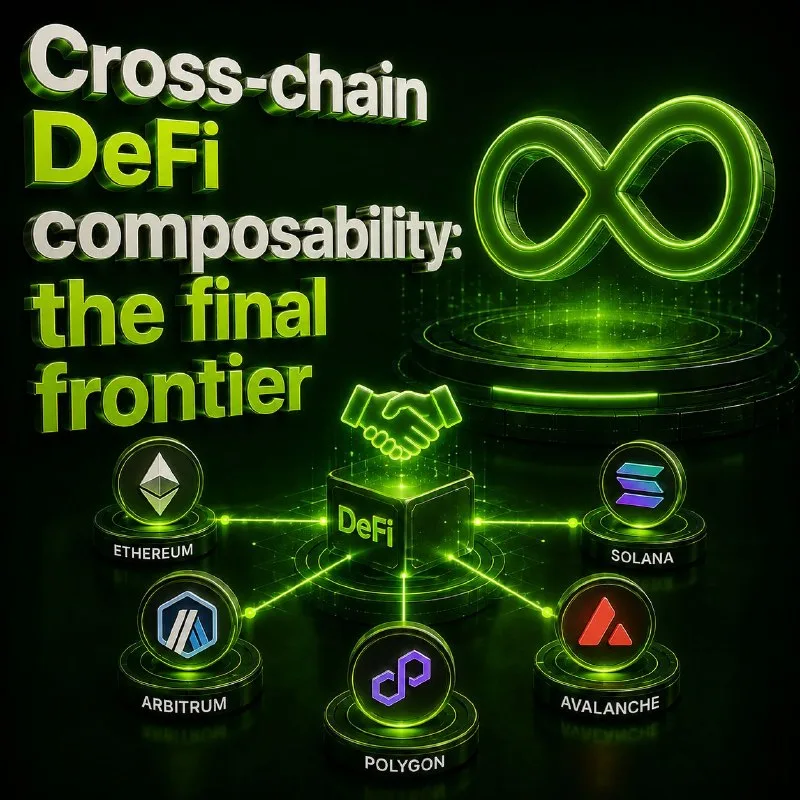
Composability Across Networks — DeFi's Next Stage
DeFi became powerful because protocols compose: lending plus a DEX plus derivatives creates strategies no single application could build alone. It is why people compare the ecosystem to Lego, even when the subject is serious money. But that composability always lived inside one network.
Ethereum DeFi is one ocean. Solana is another. Arbitrum has its own. Until now, the walls between them made cross-chain compounding feel like a research project rather than a strategy. This article explains what cross-network composability means and why Swapcoin is the piece that makes it work.
Composability Is Why DeFi Compounds
Within one chain, composing strategies is already routine: you borrow against a collateral, move the borrowed capital into a different protocol, and harvest a yield or trade the exposure. The positions layer on each other because the whole environment shares a settlement layer.
The problem is that the interesting opportunities do not sit exclusively on Ethereum. Some are on Arbitrum, some on Solana, some on Base, and each carries its own set of pools, rules, and userbases. When composability ends at a network boundary, you are forced to choose one ocean or split your attention across many without a connector.
Wall-breaking, not vault-breaking
Cross-network composability moves your strategy across a bridge without giving up the self-custody it started with. The keys stay yours; the capital just visits other chains when they offer better opportunities.
Strategy 1: Borrow Here, Use There
Suppose you hold ETH on Ethereum and want to deploy capital on a new network. The composable version borrows USDC against that ETH on Aave, transfers the borrowed balance through Swapcoin, and uses the destination protocol — a DEX, a margin venue, a yield farm — in a single follow-up step.
The alternative is a manual chain of moves: withdraw collateral, bridge it, swap, redeploy. Each intermediate step costs time and fees and exposes you to the price moves happening while you wait. Collateral stays put, the borrowed capital moves, and the strategy begins earning on the other side — that is the point.
Strategy 2: Buy Here, Sell There
The same idea applies to simple cross-chain trade flows. Buy a token on a DEX where liquidity is deep, transfer it to a network where the same token trades at a different level, and sell. Swapcoin does the transfer as part of the route, compressing what used to be a multi-tab process into a few confirmations.
This is how practical cross-network arbitrage looks — not theoretical, but a repeatable workflow. For the wider topic, cross-chain arbitrage in a single click covers the mechanics in detail.
Strategy 3: Compose Across Two Chains
The real compounding starts when you layer positions. Add liquidity on Ethereum, transfer representation to Solana, use it in a Solana-native protocol, and exit back when the terms become less attractive. Two environments, one capital base, more combinations than any single network can offer.
For the broader logic of how multiple chains change the opportunity set, the deep dive on every L2 being its own island explains the situation you are working against — and how to treat one interface for every chain as the solution, not as a curiosity.
Swapcoin Is the Connector
Swapcoin itself is the piece that allows these moves to happen without leaving a trail of intermediary logins, destination wallets, and waiting screens. It aggregates 23 bridges and 25 DEXs, finds the route, and executes across the boundary in the same flow that an ordinary swap would use.
The chain of operations is no longer dictated by the bridge: it is defined by the strategy. That is the shift from “move funds between chains” to “compose on multiple chains as if they were one environment.”
What This Unlocks
Cross-network composability changes the list of what is possible: borrowing on Ethereum to trade on Solana becomes a normal workflow, not a weekend project; hedging on Arbitrum while holding spot on Base becomes a single decision, not a set of transfers; moving collateral into a new pool on another chain becomes a one-click operation rather than a research assignment.
None of this requires trusting one gigantic protocol. Composability works precisely because each chain runs its own pieces and the aggregator connects them — you borrow on Ethereum, use the representation on Solana, and test it in a live market. If one leg underperforms, you unwind it alone instead of tearing down the whole arrangement.
For a high-level summary of why this is treated as the next stage in DeFi, a look at three multichain DeFi strategies shows the full arc from passive capital to active cross-chain orchestration.
The tools are already here — swapping across networks is no longer a research project. What is left is choosing which combinations you actually want to run. Start with one leg you understand, then let the network of possibilities do the rest.