Education
Intents Explained — You Say What, Swapcoin Figures Out How — Swapcoin Blog
Classic swaps make you choose the route. With intents, you state what you want and the platform finds the best executor. Here's why it matters in 2026.
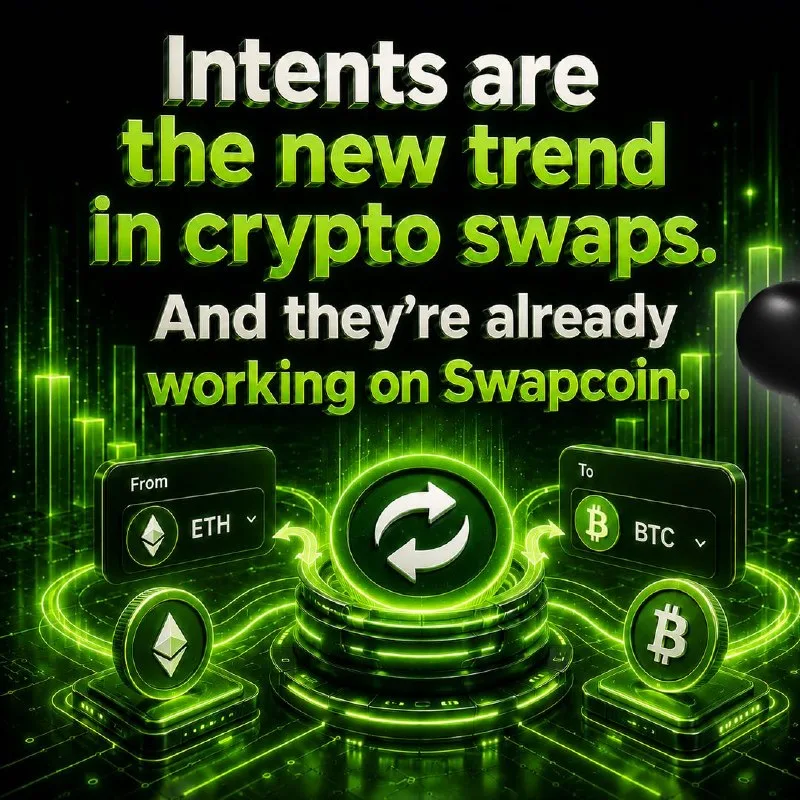
Intents Explained — You Say What, Swapcoin Figures Out How
“I want USDC on Base for my ETH on Ethereum.” That is the whole instruction. No bridge to choose, no route to compare, no chain of steps to babysit. An intent is a statement of what you want — and the platform figures out the how.
Intents are one of the defining words in cross-chain DeFi right now, and for good reason: they take the hardest part of a transfer — route selection — and move it out of your head into software. Here is what they are, how they execute, and what they change in practice.
The Old Way: You Are the Route Planner
A classic swap works like this: you choose a specific bridge, a specific route, and monitor the whole process yourself. You decide where the asset starts, which service moves it, which DEX converts it if needed, and in what order. You are the routing engine.
That is a lot of responsibility for one transfer. You compare a bridge on one tab, a DEX on another, check the fee on a third, and hope the route you picked is still the best by the time you confirm. In a market that moves every second, the route that made sense five minutes ago can be the expensive one by the time you execute it.
The key difference in one line
You say WHAT you want. The platform figures out HOW to do it. That single reversal removes most of the friction and most of the mistakes from cross-chain swapping.
An Intent Flips the Direction
With an intent, the direction reverses. You state the goal: “I have ETH on Ethereum and I want USDC on Base.” The system then searches for the executor and the route that can do this as efficiently as possible, and comes back with a concrete proposal.
What you no longer do is the important part. You do not pick the bridge, compare three gas prices, or assemble a multi-step path. The execution layer competes to serve your goal, and you simply approve the best offer you see.
How an Intent Actually Executes
- You sign a message stating a goal: source token, destination network, destination token
- Executors and routing engines see the request and propose solutions
- Each proposal carries a final price and a route
- You approve the best one, and it executes — often as a single transaction
The executor handles the mechanics: bridging, swapping, confirmations. To you it looks like one action you confirmed. If the vocabulary is new, how crypto bridges really work explains the moving parts beneath that single action.
Near Intents and Swapcoin
This is why Swapcoin has integrated Near Intents mechanics. On top of our own route calculation across 23 bridges and 25 DEXs, the intent layer adds an execution market: solvers are effectively bidding to fill your order.
The result is more options than any single bridge can offer, and a choice among them that is made for you rather than by you. You get the maximum number of paths to your goal and the best one among them.
Why This Lowers Your Cost
Competition is what drives the price down. When several executors can fill the same intent, they compete on the final price you will receive — and the fee you will pay — rather than on who has the prettiest interface.
The market moving from “choose a route” to “tell us what you need” is exactly that: routing stops being a per-user burden and becomes an infrastructure optimization. Everyone benefits, but the people who benefit most are the ones who swap across networks regularly.
Because the competition is live, the quoted price on an intent is rarely a markup — it is the best route the market can assemble at that second. That makes intents useful not just for convenience but for cost, and it is why routing layers treat them as an execution strategy, not a marketing feature.
Trust and Security: Still Your Keys
An intent is not a new kind of custody. You still approve the final proposal in your own wallet, you still sign the transaction, and your funds never sit in a Swapcoin account. The intent layer decides the path; the keys stay with you.
If you want to see what is happening behind that signature, what happens when you click “swap” walks through every step, from quote to confirmation, in plain terms.
When Intents Help the Most
Intents shine on the kind of transfers people avoid doing manually: cross-network moves that would take several steps, routes into networks you are unfamiliar with, and conversions where the best path changes by the minute. The more complex the goal, the more value you get from stating it and letting the system optimize around it.
For a tour of where these routes actually run, the networks overview lists every chain Swapcoin can route across today.