Stories
Explaining Cross-Chain Swaps to My Mom — Swapcoin Blog
Transferring money from one computer to another.' A humorous dialogue that cuts through the jargon and explains why cross-chain swaps are faster and cheaper.
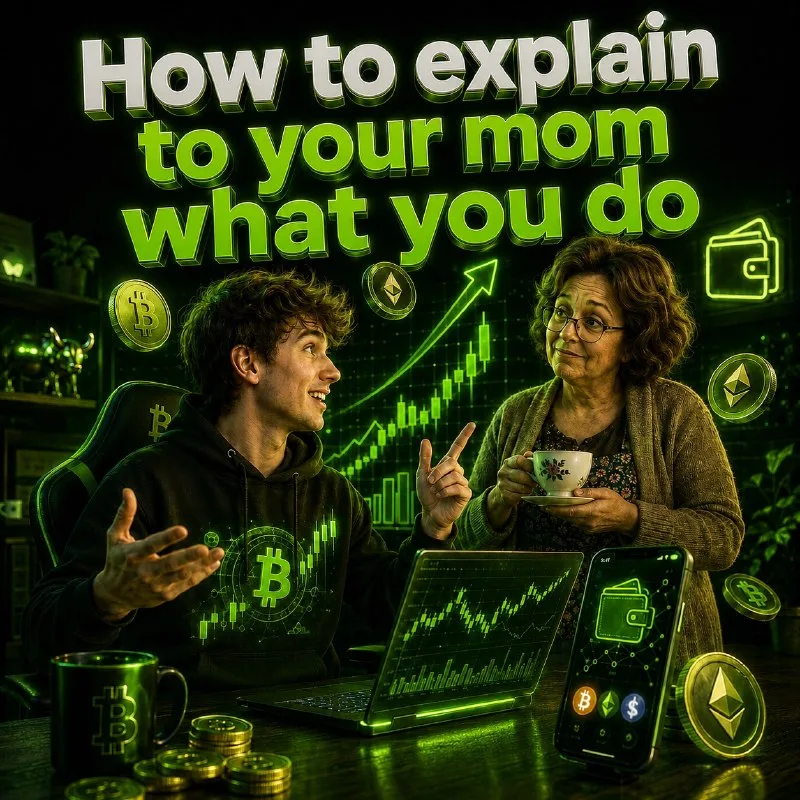
Explaining Cross-Chain Swaps to My Mom
Every crypto user eventually has the conversation. You try to explain what you actually do all day, and someone asks the one question that exposes everything: “So... what are you doing with your bitcoins?”
My mom asked it. What followed was the clearest explanation of cross-chain swapping I've ever given — because when you can't rely on jargon, you find out what you actually believe.
The Conversation
“So, what are you doing with your bitcoins?”
— Transferring money from one computer to another.
“And why? Bank of America will give you a receipt.”
— No receipts needed. Everything is recorded here in a shared ledger that no one can forge.
“Is that reliable?”
— My money is always with me. No one can freeze it, take it away, or ask me for a passport.
“But what if this 'ledger' of yours gets lost?”
— There are a thousand copies of it all over the world. It's impossible to lose.
Her first instinct was trust
She did not ask about the technology. She asked who is in charge if something goes wrong — and that is exactly the question self-custody answers better than a bank.
What Mom Actually Understood
Then she asked the question that most explanations avoid: “And why do you need so many different networks?”
— Oh, it's so it's faster and cheaper...
“You mean you're transferring from one pocket to another because it's more profitable?”
— Well... yes.
She condensed a whole ecosystem into a single truthful sentence: moving between networks is just moving value to a better position. Different networks charge different fees, settle at different speeds, and offer different yields — so the same token can be worth more on one chain than on another. That gap is the entire reason cross-chain exists.
Why Cross-Chain Matters, In Plain Terms
If you want the mechanics behind her summary, it is still simple. A network is a ledger where tokens move fast and cheaply — or slowly and expensively — depending on how busy it is. When your money sits in the expensive, busy network, moving it to a calmer one is like moving from a bank branch with a long line to one that's empty.
And because the two ledgers are separate, a bridge-style route locks your token on one side and creates a representation on the other. How a crypto bridge actually works explains that lock-and-mint step in detail. For the day-to-day level, what happens when you click “swap” will show you everything that runs before your tokens arrive.
How to Try It Yourself
Mom's final question made the whole discussion worth it: “And how long does the transfer take?”
— 30 seconds. And the fee is less than a dollar.
“Maybe I should learn how to do that too?”
— Easy. Open swapcoin.exchange.
If her reaction sounds like yours, the practical next step is smaller than you think: connect a wallet, pick a route, review the fee, and confirm. No registration, no passport, and no explanation of what a “blockchain” is required. And if the vocabulary is the only thing holding you back, our plain-English glossary of ten crypto terms
The First Transfer, Step by Step
Mom's next question, practically speaking, is “what does that first transfer look like?” The answer is shorter than the explanation above:
- Open swapcoin.exchange and connect a wallet (QR code or browser extension)
- Pick the network and token you are sending from
- Pick where it should arrive
- Review the route and the fee — every number is visible
- Confirm in your wallet and watch it land in under a minute
There is no account to create and no form to file. The first transfer is the tutorial, and
The only real requirement is a decision about what to move first. Your first transfer does not have to be large or clever — a small amount, a route you already understand, and a fee you confirmed beforehand. What it gives you back is the confidence that the whole process is yours: the keys are yours, the timing is yours, and the next transfer only gets easier from there.
Mention it once to the friend or parent who asked “so what exactly are you doing?” — and the explanation that once took an hour collapses into a sentence: I move my money to wherever it is treated best, in about half a minute each time. And if a single transfer still feels abstract, do it with a token you can spare. The mechanics are identical to your real move — and by the end you will have already used the product, which is more than most articles about it can claim.
everything after it is the same five steps with different destinations.
removes it in one sitting.