Yield
RWA Yields — Put Your Stablecoins to Work Across Networks — Swapcoin Blog
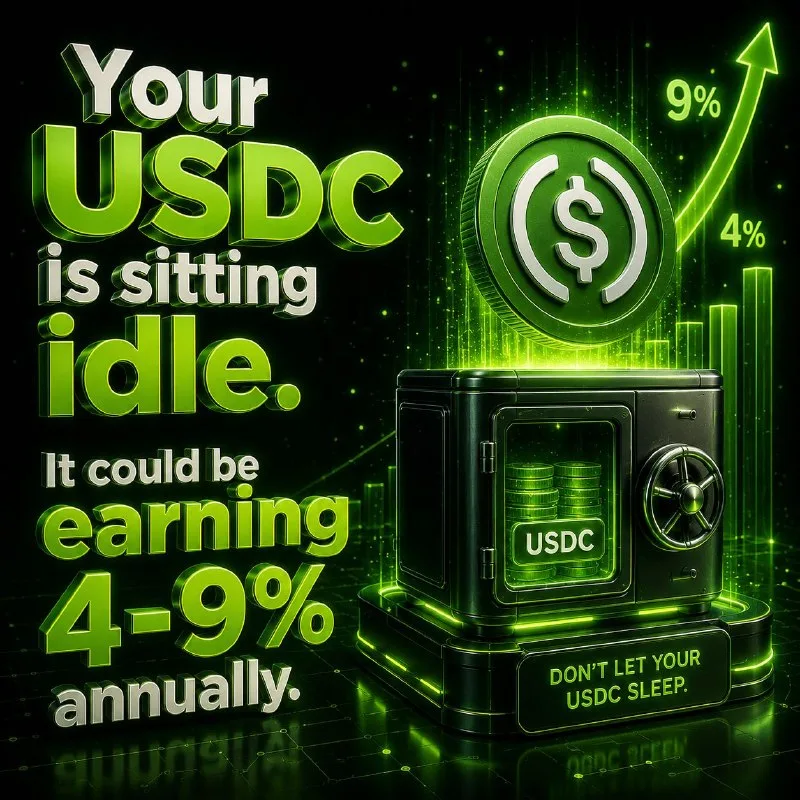
Tokenized Treasuries (Ondo, USDY, BUIDL) pay 4-9% in stablecoins — but the best rates vary by network. Move USDC to the right one and earn passively.
RWA Yields — Put Your Stablecoins to Work Across Networks
Stablecoins give you stability, not income. A USDC balance sitting in a wallet earns approximately nothing — while tokenized real-world assets, “RWAs,” turn that same balance into an instrument paying 4–9% a year, denominated in the stablecoin you already hold.
There is one catch: the best RWA opportunities live on specific networks, and getting your stablecoins to them is normally a chore. This article explains what RWA yield is, why network choice matters, and how to move your money where it earns.
An Idle Stablecoin Is a Cost
Every dollar you hold is choosing between earning and not earning. In traditional finance that choice is obvious — savings accounts, bonds, money markets. In crypto, the default is worse: most stablecoin holders simply hold, because moving to a yield is seen as risky, complicated, or both.
But the yield exists. Tokenized U.S. Treasury products like Ondo's USDY, BUIDL, and similar instruments pay holders a steady annual return in stablecoins. The growth of this market is exactly the trend that makes an “idle balance” the most expensive position you can hold.
Your money should not sit idle
Stablecoin stability plus RWA yield beats a wallet that sleeps. The only missing step is moving to the network where the yield lives.
What RWA Actually Is
RWA means real-world assets represented on-chain — in the yield context, primarily tokenized U.S. Treasury bonds and money-market instruments. The token on-chain represents a claim on the underlying treasury, and the yield flows to whoever holds it.
The appeal is a stablecoin-grade asset with real yield: your principal is stable, the return is predictable, and the whole thing is redeemable. It is closer to a savings instrument than to a trade, which is why treasury-style RWAs are becoming the natural home for capital that just needs to exist — without decaying.
The Catch: Not Every Network Fits
Here is the friction. Tokenized treasuries do not live on every chain. Some products operate on Ethereum, others on Arbitrum or Base, and the same asset can carry different yields depending on where it is issued. If your capital is parked on a network without access to the product — or with worse rates — you are leaving yield on the table.
The correction is a cross-chain move: transfer your stablecoins to the network where the RWA product trades, enter the position, and let it earn. That one move is the difference between 0% and several percent a year, every year, on the same dollars.
Moving Yield Where It Exists
Swapcoin routes stablecoins across networks directly — from wherever the capital is now to wherever the RWA opportunity is now. One transaction, a transparent fee, and your balance is standing on the network that pays.
The move is the same ordinary cross-chain transfer you already use, which means it can be done in security without waiting for an exchange, without a withdrawal queue, and without paying whatever spread an intermediate hop decides to charge. For the general principle of putting idle balances to work, moving stablecoins to higher yield is the same playbook applied to the wider DeFi yield market.
Network choice is part of the yield, not a detail around it. The same tokenized treasury can trade on several chains with different liquidity and different rates, so the task is not just reaching the product — it is reaching the edition that pays. A route that lands your capital on the right edition is already doing half the work of the strategy.
A Realistic Example
- Your USDC sits on a network without a treasury product at a usable rate
- You pick a route to the network hosting the RWA asset you want
- You review the route and the flat 0.1% fee, then confirm
- The stablecoins land ready to enter the yield position — no exchange in between
Swapcoin checks DEX quotes across networks, so you also don't have to worry about the swap landing at a lousy rate. The comparison happens automatically; all that is left is the confirmation.
Reading the Risks
RWA products are not bank deposits. The underlying treasury is real, but you are exposed to issuer implementation choices, redemption timing (often not instant), and in some cases the fund's own gates. A cross-chain move to reach them carries normal network fees and a 0.1% Swapcoin fee.
The sensible approach: understand the product's redemption terms before committing, treat the yield as income rather than as the whole point, and — importantly — compare with liquid staking across networks if you are open to alternatives. Yield hunting across chains is a comparison, not a single answer.
None of this has to be exotic. The most reliable version is quiet: keep most of your money in assets you understand, and let a small slice of stablecoin work a genuine yield that clears its own cost. Multichain makes that slice easy to place, easy to move, and easy to leave alone while it compounds.