Education
7 Common Swap Mistakes Users Make — and How to Avoid Them — Swapcoin Blog
Not enough gas, wrong network, tiny amounts, waiting for the 'perfect' price, relying on one bridge, ignoring impact, skipping review. Here's every mistake and the fix.
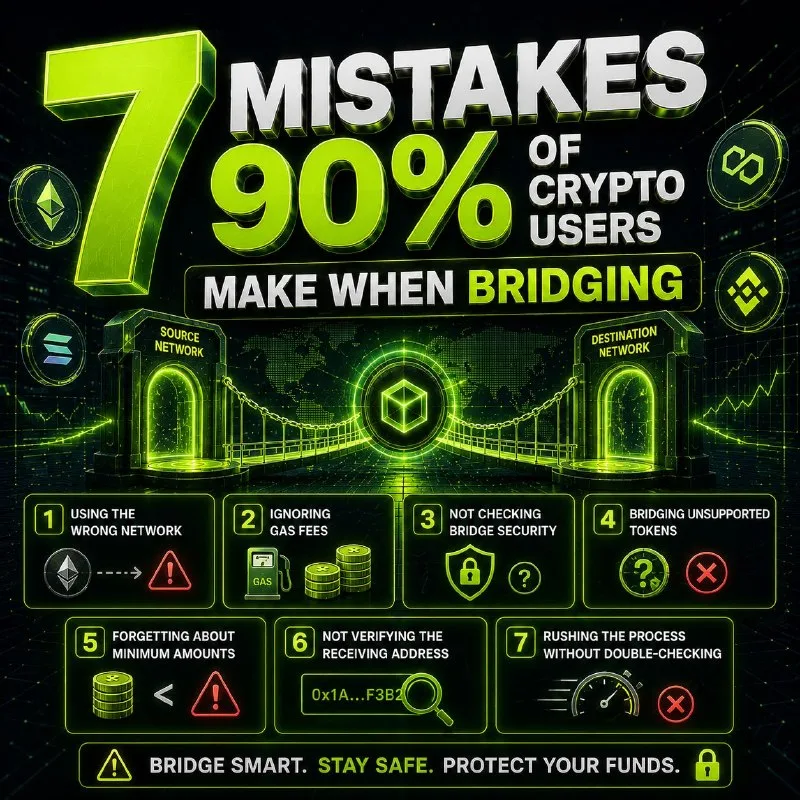
7 Common Swap Mistakes Users Make — and How to Avoid Them
We analyzed thousands of transactions to find the failures people actually hit — not theoretical edge cases, but the recurring mistakes that cost real money. Here are the seven most common swapping mistakes and how to avoid each one.
None of them are about being new. Most of them happen to experienced users on rushed days or on routes they did not fully read. Every one of them is avoidable, and most are avoidable automatically.
Mistake 1: No Gas on the Source Network
You send a transaction but forget that gas on Ethereum is paid in ETH. If the source wallet has a zero ETH balance, the transaction never goes through — often after you have already approved other steps or spent time choosing a route.
The fix: check the source network's native balance before you start, and pick a route that leaves enough gas to complete the transfer. Once you know what affects each leg, most of the problem disappears. If a transaction does fail after you fixed this, the causes are usually transient — how to stop wasting gas on failed transactions explains the recurring ones.
Mistake 2: The Wrong Network in Your Wallet
Your wallet is connected to Ethereum, but you are trying to send to Arbitrum — or the dapp you are using expects a different network than the one you have selected. The transaction fails, and debugging it costs another round of clicks.
The fix: confirm the active network before you sign. An aggregator handles this automatically by reading the source and destination settings for you, so the mismatch cannot silently ride through the whole route.
Mistake 3: Sending an Amount That's Too Small
Ethereum gas costs $15 while you are transferring $20. The numbers are extreme, but the same math applies at every scale: when the fee is a large fraction of the amount, the transfer is a loss before it starts.
The fix: compare the route fee to the amount you are moving, and use cheaper networks for small sums. Low-fee chains make small transfers practical — while on pricey networks, a fee can swallow a small send entirely. The size of the amount decides whether the route makes sense.
Mistake 4: Waiting for the “Perfect” Price
You see a rate and decide it might improve — so you wait. The price moves against you, the fee stays, and you end up either executing worse or abandoning the move entirely.
The fix: act on the rate that makes sense now and stop pretending prediction is part of the process. If you want better pricing automatically, an aggregator compares multiple venues so the rate you get is the best live option instead of the one you got lucky guessing.
Mistake 5: Ignoring Slippage and Price Impact
You rely on the headline price and miss the reality: the amount you receive is less than the amount you thought you were swapping, because of slippage and price impact. On large orders in thin pools, this gap can be the actual cost of the transaction.
The fix: read the receive amount, not the route headline. The difference between the two is the part of the ledger most people skip, and the true cost of a cross-chain transfer makes it concrete. On Swapcoin the receive amount is shown before you confirm — what you see is what you get.
Mistake 6: No Gas on the Destination
The asset arrives, and then the next transaction on the destination needs its native token — which you never brought. You are stuck, a bridge away from using the money that is already there.
The fix: routes that include the destination's native gas token. Swapcoin can deliver your asset together with enough of the destination native token to use it immediately — the transfer and the ability to spend it in one move.
Mistake 7: Managing the Route by Hand
You compare bridges, check two DEXs, and assemble the path yourself. It is slow, error-prone, and — at the exact moment you need speed — you are doing the one thing that guarantees lateness: manual research.
The fix: let an aggregator do it. Comparing quotes from many venues at once is what aggregation is for, and why aggregation beats a single bridge shows how much that removes. For the step-by-step of what runs under the hood, what happens when you click “swap” walks the whole process.
Seven mistakes, one fix
Every mistake above is a check an aggregator does for you automatically: gas on both ends, correct network, sensible amounts, live rates, and an honest receive figure.
How Swapcoin Handles All of It
Swapcoin was built to remove exactly these failure points. It checks your gas balance across source and destination, verifies network compatibility, optimizes the amount relative to fees, compares live routes instead of guessing, and shows the receive amount — not the headline price — before you sign. The flat 0.1% fee is visible upfront, and no part of the route is left as a surprise.
One platform. Zero unnecessary mistakes. To time everything around congestion as well, when Ethereum gas is cheapest helps you schedule the big moves for the cheap hours — and five rules to keep your crypto safe covers the security fundamentals that apply no matter which tool you use.